We use published product information and cited sources. This is not a report of a wear test. Prices, offers, and policies can change.
Our editorial approachBuy the missing layer, not an entire collection
Start with the clothing problem you need to solve. You might need a long-sleeve layer beneath existing outerwear, bottoms that fit under trousers, or both pieces for a new outfit. Those are different baskets, and the best value is not necessarily the one containing the most garments.
This buying checklist helps you narrow a choice before visiting a merchant. It uses source-based examples checked October 22, 2026, rather than a tested ranking. No garment here is assigned a universal temperature limit, comfort score or claim to be the best for everyone.
Decide which parts belong in the basket
List the pieces you already use comfortably, then identify the gap. A top-and-bottom set can simplify an outfit purchase when you need both halves and the same size works. Separates let you choose different sizes, weights or replacement timing. A short-sleeve shirt is another configuration, not simply a less expensive version of a complete thermal set.
Do not add a bottom you will rarely wear to make a set seem economical. Equally, do not compare a set's headline price with one competing top and call the difference an outfit saving.

Choose a usable fit before a brand
For a top, consider chest movement, shoulder seams, sleeve length, neckline and coverage while bending. For bottoms, consider the waistband, hips, crotch movement and leg length under your normal trousers. Your footwear can make excess fabric near the lower leg particularly noticeable.
A useful base layer should work with the rest of your clothing rather than demand a new outer outfit to accommodate it. Compare the manufacturer's style-specific chart and clarify whether its numbers refer to the body or garment. Use a familiar size letter only as a starting reference.
Use fabric weight as a filter
GSM expresses fabric mass per area. It can help organize lighter and heavier options, but does not prove how warm, strong or comfortable a finished garment will be. Sleeve coverage, knit, construction and your full outfit still matter.
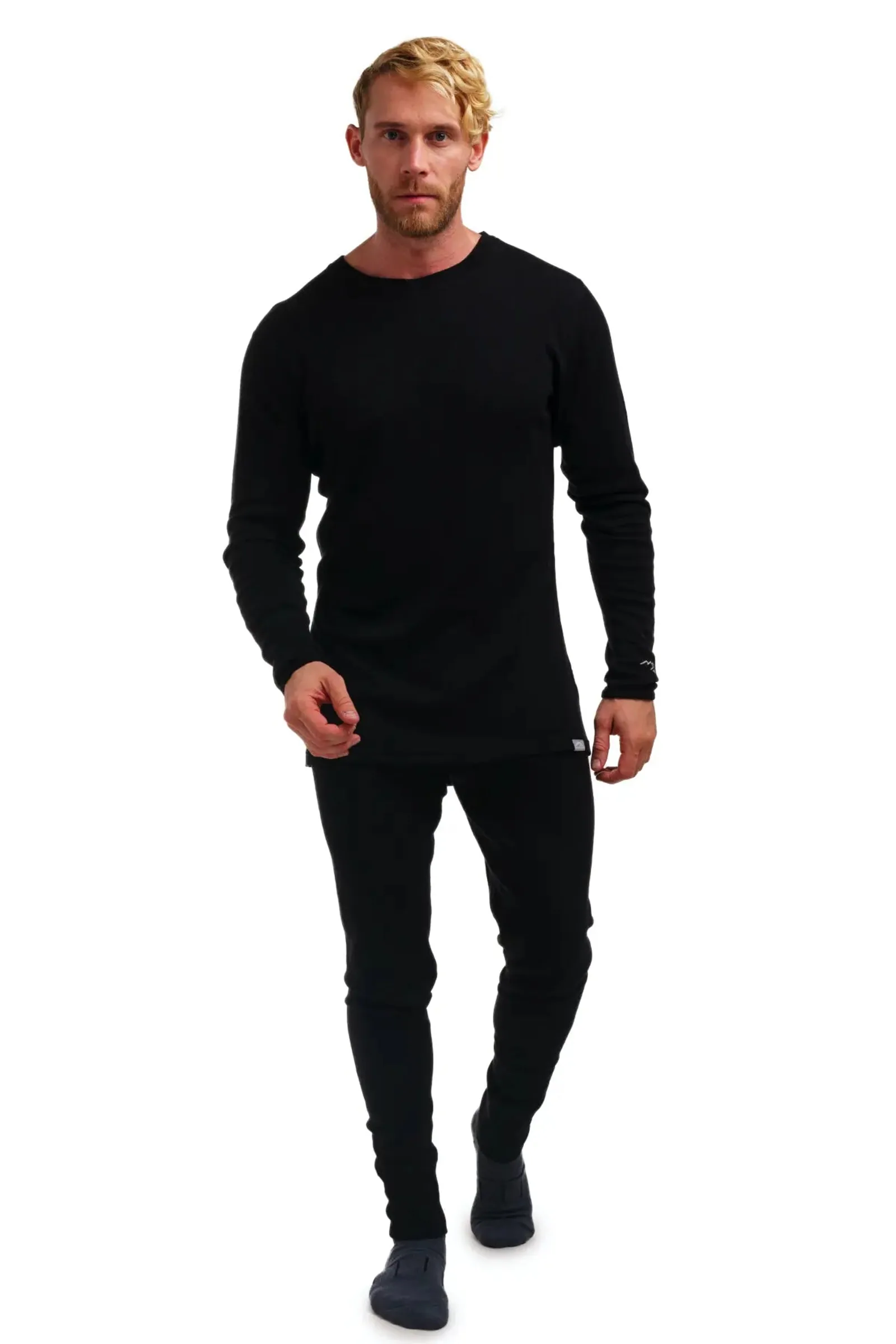
The current Merino.tech references include a 165 long sleeve, a 250 set and 320 separates. Our named-brand comparisons also explain their selected weights. Choose a plausible range for your activity and layers, then inspect the actual model rather than using a number as a safety rating.
Read composition and features at the item level
A merino product can have a main-body fiber specification that does not describe every trim, elastic waistband or accessory. Check the actual label and model details. Do not assume a higher wool percentage automatically establishes a better garment for your use; construction and the features you need still deserve attention.
A zip collar, functioning fly, gusset or seam position can be relevant to a particular buyer. Ask what the feature changes in your routine. A longer list of features is not evidence of a more comfortable or durable result without a suitable comparison.
Make laundering a selection criterion
Read the care instructions before ordering. A garment needing flat drying should fit the space and time available at home or during travel. Another merino item may permit a different routine, so do not infer care from fiber content alone.
If a household wash often goes straight into a dryer, consider whether you can reliably separate the new layer. An inexpensive item that repeatedly gets the wrong treatment may not be a practical purchase. Plan a spare only when it solves a real drying or rotation need, rather than as an automatic bundle addition.
Build a fair total-cost comparison
For each shortlisted option, total the required top and bottom, then check delivery and applicable offers. Keep the compared garment types and intended job as similar as possible. If weights differ, state that difference instead of assuming equivalent insulation.
Use the live selected variant, not a price remembered from another color or an old guide. Consider return eligibility as part of purchase risk, especially when trying unfamiliar sizing. A lower reference basket can be appealing without proving lower cost per wear or better performance over time.
Finish with a three-question decision
Can you explain which gap the purchase fills? Can you identify the relevant measurements and follow the care label? Do the current basket and return conditions still make sense? If one answer is unclear, resolve it before comparing coupons.
Our Merino.tech selection links can earn a commission. The comparison and educational guides remain useful even if you decide against a purchase. For an outdoor trip, choose clothing within a complete plan appropriate to the route and conditions; a base-layer purchase alone does not replace that preparation.
Check the actual model
Published product details
These links take you to the merchant. Confirm the current price, exact composition, size chart, and return conditions there before ordering.
Icebreaker Men's Merino 200 Oasis Long Sleeve Crewe
100% merino wool, exclusive of decoration · 200 GSM
Compare with Merino.techIcebreaker Men's Merino 200 Oasis Thermal Leggings wFly
100% merino wool main fabric, excluding waistband and decoration · 200 GSM
Compare with Merino.tech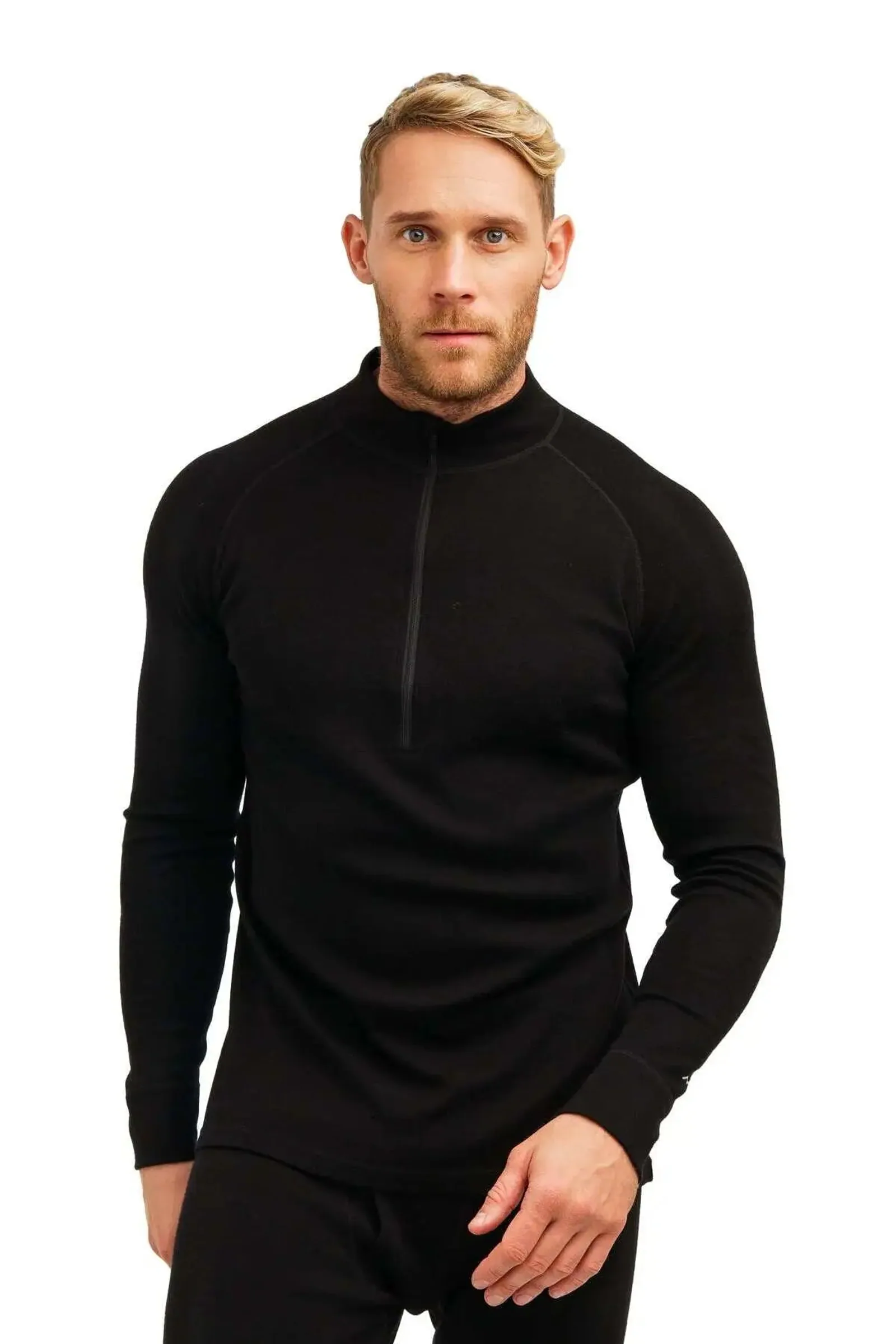
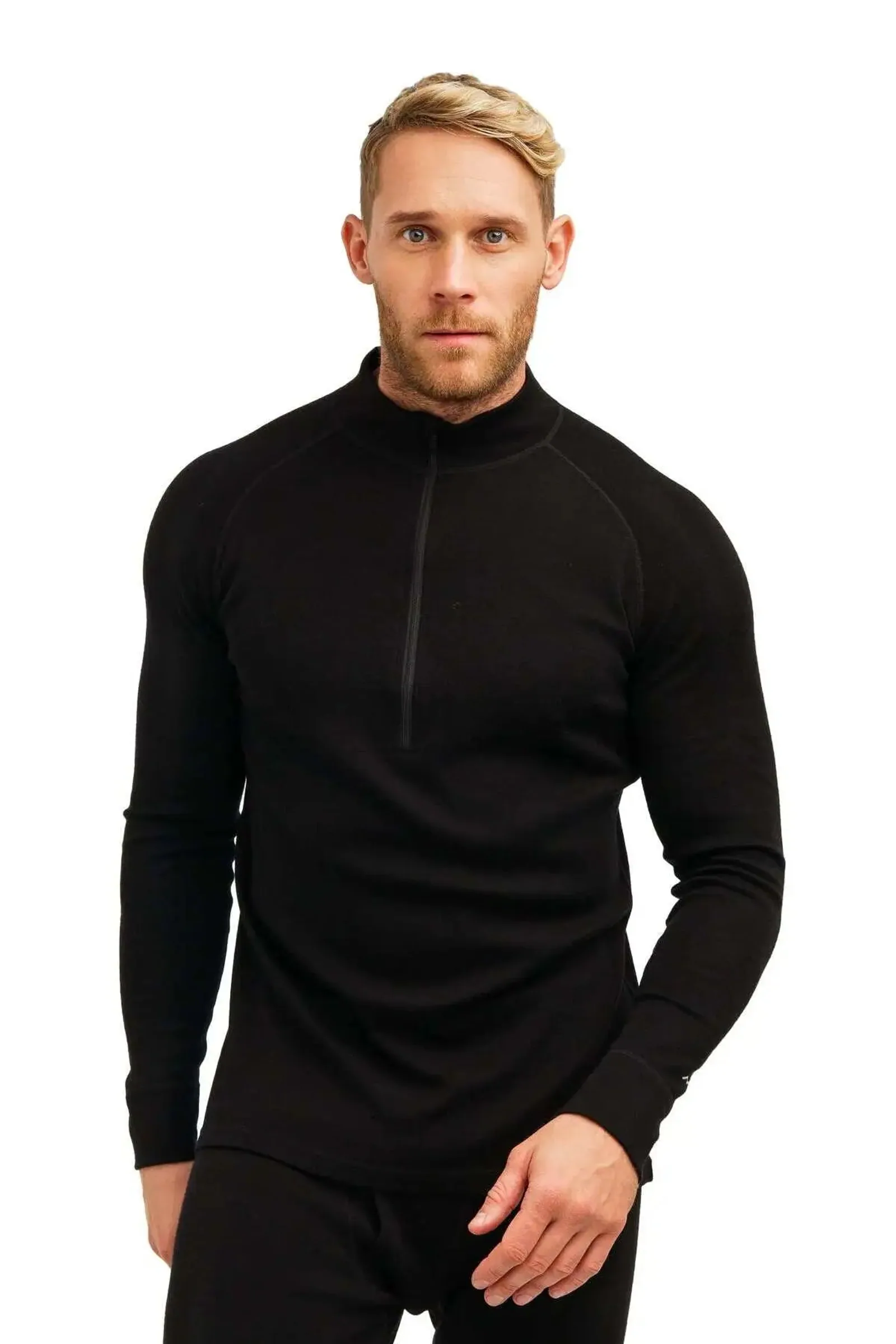
Men's Merino Half Zip Long Sleeve 320 Black
100% merino wool (main body, merchant specification) · 320 GSM
View at Merino.techWe may earn a commission through this link.
See our affiliate disclosure for how commercial links work.
Q&A / THE USEFUL ANSWERS
Common questions.
Do I need both a top and bottom?
Only if both fill a gap in your outfit. A set can be convenient, but separate pieces may better match your sizes, weights or existing clothing.
Should a merino base layer be tight?
Look for the intended fit without unwanted pressure, restricted movement or bunching. Use the style's dimensions and your outer clothing rather than one universal fit rule.
Is 100% merino always better than a blend?
No universal ranking is established here. Check the exact construction, needed features, care and supporting evidence for the use you have in mind.
How should I compare prices?
Compare the same needed pieces, acknowledge specification differences and use current variant prices plus checkout costs.
Are these tested best-buy rankings?
No. This is an original source-based selection checklist. Product performance tests and ratings are not claimed.
REFERENCES / FOLLOW THE EVIDENCE
Sources & checks.
- Merino.tech Men's Thermal Set 250 Black Checked Oct 22, 2026
- Merino.tech Men's Long Sleeve 165 Black Checked Oct 22, 2026
- Merino.tech Men's Half Zip 320 Black Checked Oct 22, 2026
- Merino.tech Men's Base Layer Set Chart Checked Oct 22, 2026
- Woolmark: Caring for Wool Checked Oct 22, 2026
- US National Park Service: Ten Essentials Checked Oct 22, 2026
Found something that needs a correction? Let us know.