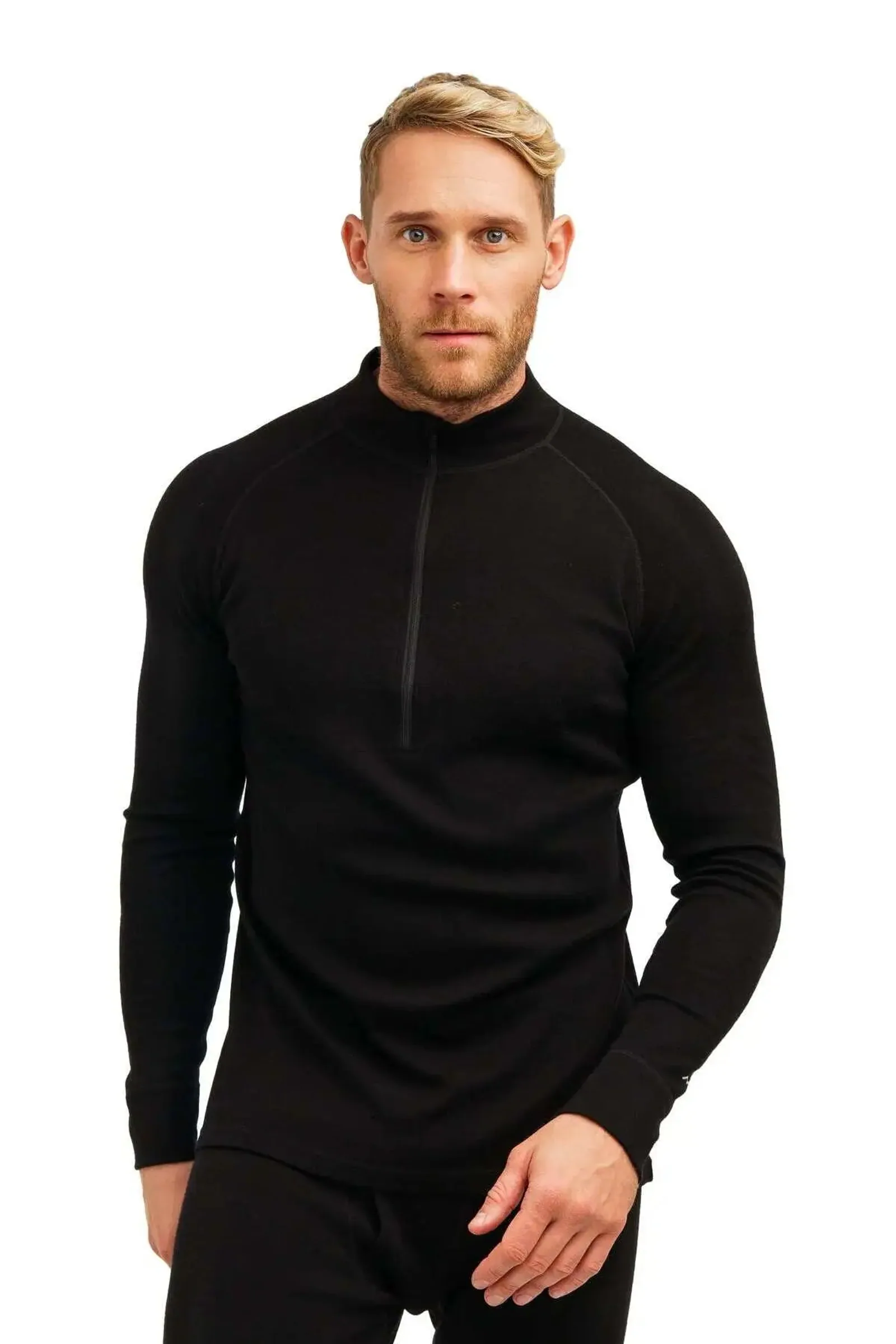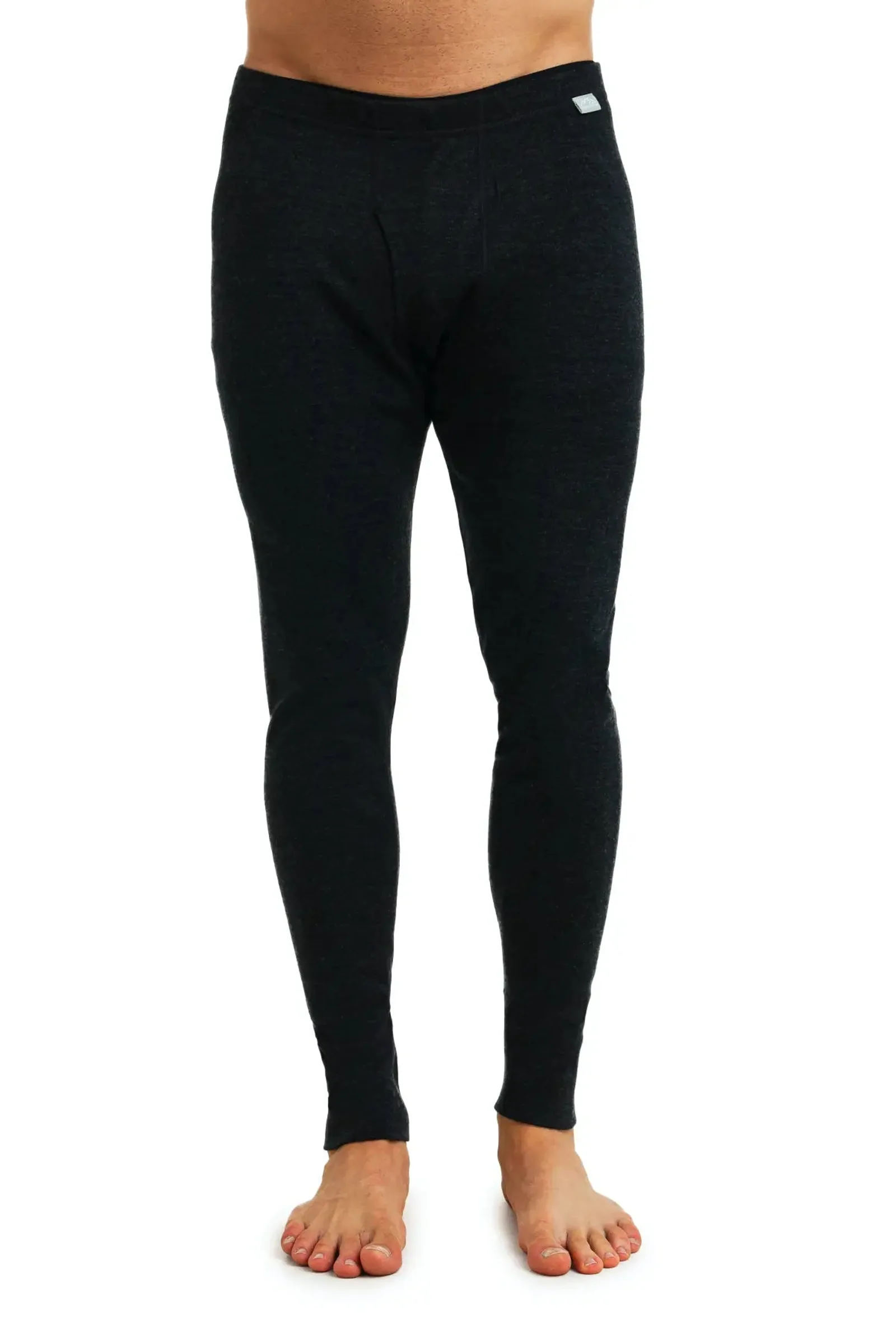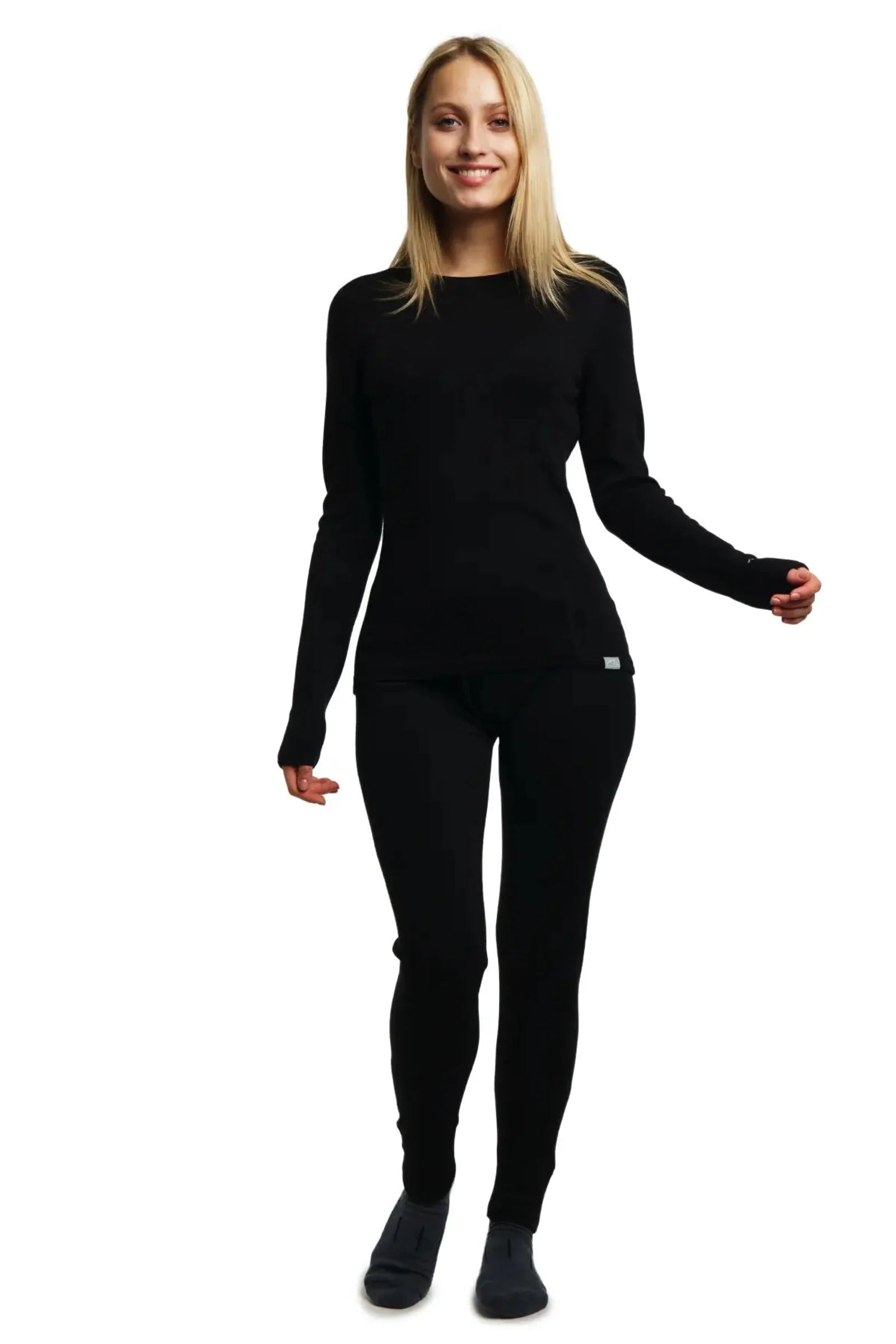
We use published product information and cited sources. This is not a report of a wear test. Prices, offers, and policies can change.
Our editorial approachMerino is not an itch-free guarantee
Merino can feel different from coarse wool clothing you remember, but no description guarantees comfort for every wearer. Woolmark explains that fiber diameter is relevant to prickle and softness. The finished garment also has seams, cuffs, a cut and a neckline that can matter to the experience.
Treat 'soft' and 'itch-free' marketing as reasons to inspect a product, not as a substitute for your comfort. This educational clothing guide uses sources checked October 22, 2026. It does not diagnose a skin condition or establish medical suitability.
Understand what microns can tell you
Microns describe fiber diameter. They are different from GSM, which describes fabric mass per area. A heavier fabric is not automatically made from a coarser fiber, and a low GSM number does not prove that a garment will feel softer.
The checked Merino.tech information describes 17.5-micron wool, while the selected Icebreaker Oasis references list 18.9 microns. These are manufacturer specifications, not our measurements or a blind comfort test. The numerical difference does not settle which finished garment your skin will prefer.

Separate fabric feel from a fit problem
A pressing neckline, a seam beneath a shoulder strap or a cuff squeezed under a jacket can create an unpleasant experience even when the main fabric feels acceptable. Identify where discomfort occurs and what touches that area before attributing everything to the fiber.
During a permitted indoor fit check, use the outer clothes you intend to wear. If a collar is the problem, a larger body size may not solve it. If movement pulls a seam, compare construction and cut. A specific observation gives the merchant a better question to answer.
Look at the exact style and label
Items from one merino brand can have different compositions, knits, trims and care requirements. A main-body fiber statement does not describe a waistband, zipper backing or every part of a bundled accessory. Check the selected style and, after delivery, its sew-in label.
Use a garment you already find comfortable as a reference for neckline, seam placement and fit. Similar specifications can narrow a shortlist, but the new garment needs its own assessment. We have not run a panel comparing these products on different skin types.
Plan the first assessment before ordering
Read return eligibility, retain tags and packaging, and inspect the unused item promptly. If fitting is permitted, assess shape and contact points without treating the garment as equipment for a full day. Follow the retailer's actual conditions rather than assuming that any trial will be accepted.
You do not need to force yourself to keep wearing uncomfortable clothing because of a marketing claim. If comfort is uncertain, consider another construction or material instead of buying several copies of an unfamiliar product.
Washing is not a promised fix
Follow the garment's care instructions and use suitable detergent. Handling and residue may affect how clothing feels, but we do not promise that a wash will remove itch or change your tolerance of the fiber. Do not experiment on a new item while assuming it remains eligible for an unused-item return.
Avoid hot washing, aggressive rubbing or an improvised softening treatment intended to alter feel or fit. A procedure used for one wool item can be unsuitable for another. Ask the seller about an unclear care instruction before cleaning.
Keep personal reports within their limits
A buyer saying an item feels comfortable is an individual experience, not a measured probability that it will work for you. One uncomfortable report also does not establish that every merino garment shares the problem. Neither should become a fabricated rating or a universal conclusion.
We do not convert brand copy into a medical claim, apply clinical results to a specific untested product, or label clothing universally hypoallergenic. A shopping guide cannot determine fabric suitability for a medical condition or known sensitivity.
Choose an explainable next step
If you like an existing merino garment, compare its cut and known composition with the model you are considering. If you are new to the fabric, prioritize clear specifications, a workable care routine and an understood return policy. If the issue is a seam or collar, solve that issue instead of shopping only by micron number.
We may earn commission through Merino.tech links. That does not change the evidence limits or require you to choose wool. A different fabric or construction can be the better answer for your comfort and intended use.
Q&A / THE USEFUL ANSWERS
Common questions.
Is all merino wool non-itchy?
No. Fiber diameter matters, but the finished garment and individual tolerance still matter. No universal comfort guarantee is made.
Does a lower micron number prove a better shirt?
It describes finer fibers in the specification, not the complete garment's fit, construction, quality or personal comfort.
Will washing stop merino itching?
We do not promise that. Follow the label and check return conditions before washing an unfamiliar garment.
Does GSM tell me whether wool will itch?
No. It measures fabric mass per area; microns concern fiber diameter. Neither alone determines your experience.
Is this advice about wool allergy?
This concerns clothing selection and evidence limits. It cannot diagnose a condition or establish medical suitability.
REFERENCES / FOLLOW THE EVIDENCE
Sources & checks.
- Woolmark: Fibre diameter and softness Checked Oct 22, 2026
- Merino.tech Men's Thermal Set 250 Black Checked Oct 22, 2026
- Icebreaker Men's 200 Oasis Crewe IB1043650L1Reference address: https://na.icebreaker.com/en-us/products/men-merino-200-oasis-ls-crewe-ib1043650l1Checked Oct 22, 2026
- Merino.tech refund policy Checked Oct 22, 2026
- Woolmark: Caring for Wool Checked Oct 22, 2026
Found something that needs a correction? Let us know.